Applies to: All users
A target value is the proficiency level a skill is expected to reach for a particular job. It's the benchmark your ratings are measured against — and the basis for spotting skill gaps.
Every skill in an assessment is tied to a Standard Job.
For that job, each skill has a Target Value (also called the Expected Value) — a number from 1 to 5 on the proficiency scale.
The target value answers: "How strong should someone in this job be at this skill?"
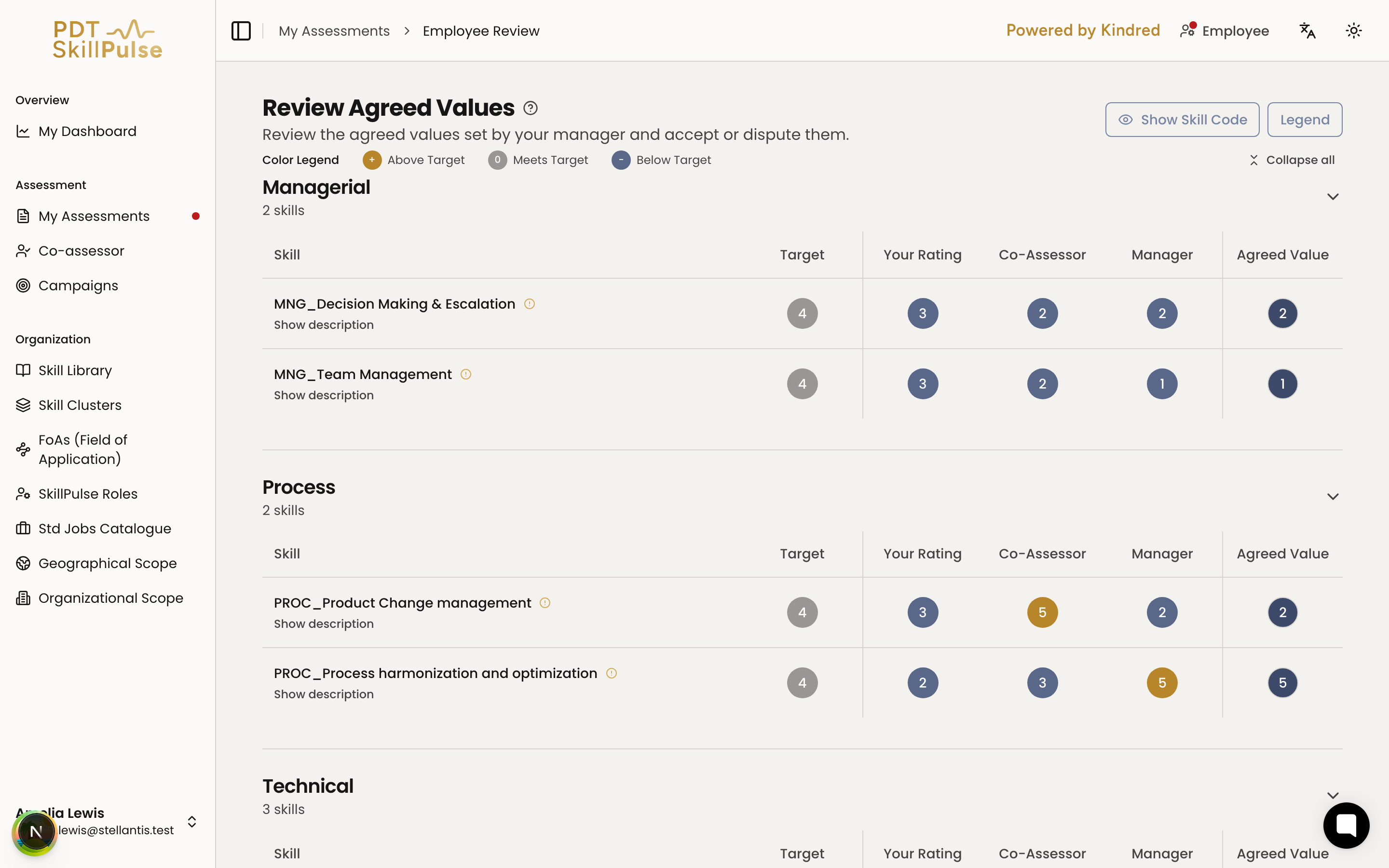
Ratings and targets both use the same 1–5 Proficiency Level scale, where 1 is the lowest level of proficiency and 5 is the highest. The same scale is used by everyone — employee, manager, and co-assessor — so the numbers are comparable.
When you rate skills, each level is described as:
1 Basic awareness only
2 Knowledge only
3 Autonomy in routine and recurring tasks
4 Autonomy in complex tasks and coaches others
5 Expert reference.
On the assessment setup screen the same scale appears as the Target Value Scale:
1 Knowledge Only
2 Basic Application
3 Independent Application
4 Advanced Application
5 Reference Expert.
A Skill Gap is the difference between a value and the target value:
Skill Gap = value − target value
During the rating stage this compares each rating to the target; the final gap compares the manager's agreed value to the target. A gap of zero or above means the skill meets or exceeds what the job needs; below zero highlights an area to develop.
A gap at or above zero means the skill meets or exceeds what the job needs.
A gap below zero highlights an area to develop.
Skill gaps roll up across an assessment, a person, and a team, so managers can see development needs at a glance.
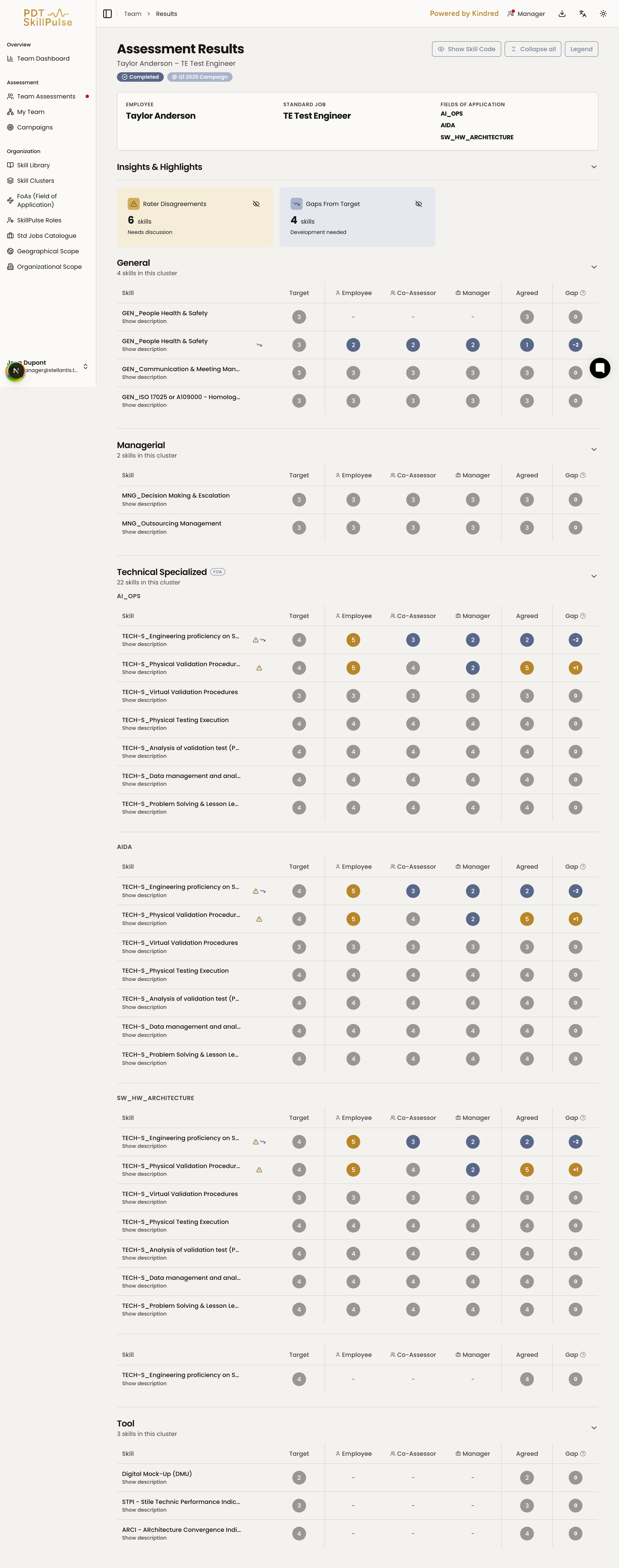
Don't confuse the two:
Target value — the expected level for the job (the benchmark).
Agreed value — the final level the manager records for the employee after reviewing all ratings.
The agreed value is what gets compared to the target value to measure the final gap.
When setting up an assessment, the manager can choose whether to show target values to the employee. If shown, the employee can see the benchmark while they self-assess.
Yes. Each skill arrives with a default target value from the Standard Job, but during setup the manager can adjust the target value for any skill to better reflect what the role actually requires. Adjusted targets are flagged so it's clear they differ from the job default. The (possibly adjusted) target is the benchmark the assessment then measures against.